Other Regulations
In addition, God gave many more “statutes” (Exodus 21), “ordinances,” and “commandments” to be followed. God promises Israel abundant blessings, peace, and prosperity.
“If you walk in My statutes and keep My commandments so as to carry them out…” (Leviticus 26:3 NASB).
There are various categories of regulations. Many laws concern the economy and society: for example, the status of slaves or widows and the position of foreigners. There are regulations for the administration of justice, but there are also laws regarding relationships between men and women.
A large part of the legislation concerns worship: the Sabbath and the festivals, the sacrifices in the sanctuary, the priests, and dietary laws (regarding what one may and may not eat—known as kosher in Judaism).
Many regulations relate directly to life in the Promised Land of Israel and can only be fulfilled there. That is one of the reasons why it is so important that the Jewish people can once again live in the land of Israel.

A traditional kosher Seder table with a Seder plate, matzah, and the Passover Haggadah, the book that contains the story of the Exodus from Egypt and is read aloud during the Seder evening.
Be holy
In the Torah, God says to Israel: “Be holy, for I, the Lord your God, am holy.” By living according to God’s commandments, Israel reflects something of God Himself. Through His commandments, God makes the people Israel, as it were, a sanctuary where He Himself wishes to dwell (Exodus 25:8).
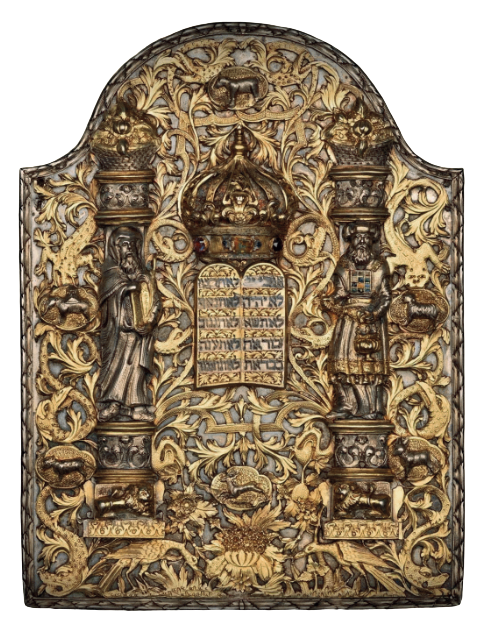
An antique Torah shield, probably from the 18th century. These are used to decorate the Torah scroll when it is not being read. It features a highly detailed silver relief depicting biblical figures and texts, including the Ten Commandments.
Ten Words
On Mount Sinai, God gave the Ten Words (Ten Commandments) to Israel (Exodus 20). The Ten Words were ten basic principles for transforming a people of slaves into a free people. That is why it begins with “I am the Lord your God, who brought you out of the land of Egypt, out of the house of slavery.” (Exodus 20:2 NASB)
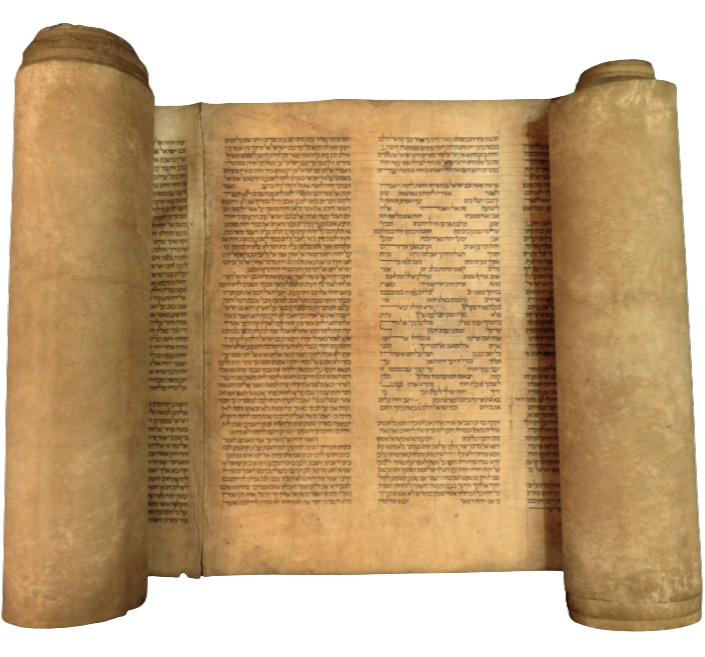
The oldest known complete Torah scroll in the world was discovered in 2013 in Bologna, Italy. The scroll, which dates from 1155–1225 CE, contains the complete text of the Five Books of Moses in Hebrew and is kosher. In this context, “kosher” means: free of scribal errors.

Torah scrolls are held aloft during a bar mitzvah at the Western Wall in Jerusalem.
Israel and the Nations
The Torah, with all its statutes, ordinances, and commandments, was given to Israel. Israel is God’s possession and was intended by God to be a priestly kingdom (Exodus 19). Among other things, this means that Israel serves as a priest to the nations of the world. Israel prays for the world and shows the world who the one true God is.
Rules also apply to the other nations, but there are fewer of them and they are different from those for Israel. Most dietary laws do not apply to the nations, with the exception of the prohibition against consuming blood. The nations are also called upon to acknowledge and worship the God of Israel and to refrain from idolatry. Furthermore, it is the duty of the nations to establish a society where righteousness and justice prevail.

Parchment of the Ten Commandments, Jekuthiel Sofer, 1768

Moses descends Mount Sinai with the Ten Commandments. Ferdinand Bol, oil on
canvas, 1662